
Christopher Columbus, Part 3: How Does Reactive Arthritis Compare to Rheumatoid Arthritis?

What is Reactive Arthritis?
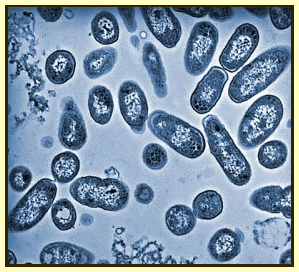 Reactive Arthritis is the modern name given to Reiter’s Syndrome. Apparently, the first name lost favor because Reiter was a Nazi. The name “reactive” refers to the fact that Reactive Arthritis occurs in reaction to an infection. It is also referred to as “post infectious” arthritis.
Usually Reactive Arthritis occurs as a triad of symptoms that includes eye inflammation, urethritis, and arthritis. The illness may last only a few weeks or become a chronic condition as it did for Columbus. It is triggered by a bacterial infection; suspected culprits include: salmonella, campylobacter, shigella, and Chlamydia. Reactive Arthritis may begin as enteric, which is intestinal in origin, or genitourinary, which is sexually transmitted.
Reactive Arthritis is a spondarthropathy
Reactive Arthritis is part of the same group of conditions as Ankylosing Spondylitis, Psoriatic Arthritis, and Crohn’s Disease. Patients are almost always seronegative for Rheumatoid factor and positive for a gene marker called HLA-B27. There are other commonalities: foot / heel pain, rashes / psoriasis symptoms, and axial skeleton arthritis which may lead to fused spine.
The gene difference is seen as a predisposition to this type of arthritis. However, an environmental trigger is required for the disease to commence.
How is Reactive Arthritis like Rheumatoid Arthritis?
- Joint and muscle pains
- Genetically linked autoimmune disease
- Typical pattern of flares and remissions
- Frequent fevers, morning stiffness, and fatigue
- Prognosis varies widely among patients
- Various other body systems may also experience inflammation
- Treated with these medications: NSAIDs, DMARDs, steroids, and Biologics
How is Reactive Arthritis different from Rheumatoid Arthritis?
- Can more often be “cured” with early treatment
- Is more common in men than women
- Typically involves urinary tract symptoms
- Much more rare than RA
- Occurs most frequently during the 30’s (slightly younger peak onset age)
Remarkable observations about Reactive Arthritis:
- Perhaps the mysterious onset of Reactive Arthritis is partially responsible for the stigma of autoimmune illnesses.
- Ironically, the original illness usually resolves before the Reactive Arthritis begins to flare.
- Reactive Arthritis itself is not contagious regardless of the initial infection.
- Many healthy people carry the HLA-B27 gene.
- Dr. Frank Arnett, rheumatologist and Columbus expert, says he would have treated Columbus with a TNF blocker like Enbrel. “Columbus should have been on one of these drugs. Who knows? It could have changed history.”
More information on Reactive Arthritis: About Reiter’s Syndrome , Reactive arthritis on MedicineNet
More on Columbus and Reactive Arthritis:
Part 2: What kind of Arthritis Did Christopher Columbus Have?
Columbus Day and World Arthritis Day: Is There a Connection?
Recommended reading:
- What is Remission of Rheumatoid Arthritis? Part 1
- The Rheumatoid Arthritis Self-definition Fairy
- Rheumatoid Arthritis Makes Things Difficult


When I was in nursery school I was diagnosed with reactive arthritis. My left knee would always swell when I had step throat. It is important to note here that I was getting strep throat nearly every month through my elementary school years and subsequently I am now allergic to ALL antibiotics except the 3day Z-pack which I have to take with benedryl to combat a rash. They diagnosed me with reactive arthritis because they couldn’t figure it out. I had test after test after test and Children’s Memorial Hospital. The doctors were stumped. This reaction to strep throat continued until I was in high school when it mysteriously stopped. I also have no had strep throat since. However the symptoms of the reactive arthritis continued and continued to get worse until my dr in college who also happened to be a rhuematologist what Ah-ha!! He put the puzzle together after I had my gull bladder removed and called me with x-rays of my back in his hand and said, YOU HAVE AS!!! THAT is what it has been all along!! Tricky arthritis cousins!! They can be so difficult to weed out and differentiate between, hat’s off to the doctors who can properly diagnose any of us!
The more of your story I hear, the more fascinating it is. All of those things are clues that could one day lead to answers/causes/cures. Someday, maybe this will be seen as the ‘dark ages’ of arthritis…
G-d willing today will be tomorrows dark ages of RA and AS! That would be so amazing!!
I was diagnosed with reactive arthritis in 1998. I taught school and a major epidemic of shigella (stomach virus) invaded our school. Two weeks after being treated with antiobiotics I began to swell and hurt. Tested and had the gene. I went into remissive state for 1 year and got pregnant. Two weeks after my daughter was born, bam. Since then I have had to have stronger and stronger meds and had to quit work 3 years ago. With reactive each time you get sick you go into a worse state. So, teacher=sick kids. You are right. Reactive is basically unheard of, so I waited 6 months to get in with a decent rheumy and after 6 years just found an internal med dr. that can treat my symptoms and know what is going on. I love your site because the two are very much alike in symptom. Most people think I have RA. Hoping and praying for a cure for all arthiritis patients very soon.
Teresa, I just realized there was a tech. diff. in posting your comment! I hope it goes up now! Sorry.
Yes, I guess Reactive A. is more rare? Do they tell you whether you can get remission?
:)You can hang out w/ us RA’ers any time.
A friends young daughter, only 11 years old was recently diagnosed with Reactive A and the doctor feels positive this will be put in remission. I pray this will be so, but will look forward to any update on her situation.
Hi, just found your website. I’m really interested in your idea that understanding more about reactive arthritis could lead to better understanding of RA. I have reactive and the doctor believes it will be chronic, not go into remission. I have had shigella, chlamydia and campylobacter infection, but all happened probably 10 to 20 or more years before I was diagnosed with reactive.(I was diagnosed last year.) When I got the campylobacter infection (food poisoning), I was violently ill, and I thought, wow, without modern medicine, I could have died. And I worried about getting Guillain-Barre infection, because that was mentioned as a possibility. I was fine for years, but then…
I had never, ever heard of reactive arthritis until I came down with its symptoms and finally got referred to a rheumatologist.
I take methotrexate and Relafen and I function pretty well, but am forced to be much less active than I was. From what I’ve read, my symptoms sound kind of like mild RA. I will be following your blog. Thank you for your efforts!
The fun part about Reactive is thise: try to find information about it that doesn’t say “it will go away”…
Not helpful when yours doesn’t.
My diagnosis has been changed from Reactive to Rheumatoid, Not sure if it’s just because the medicare system here won’t pay for biologics for Reactive, or if the Doc has decided that I fit better into Rheumatoid… but I don’t really fit into either if you go for the “typical” diagnoses. I didn’t get the usual eye and urinary tract inflamations, turned up negative for antibodies of all the usual original infections. But it started only in my knees, and didn’t hit my hands until recently, which I guess is why they didn’t go for Rheumatoid first up.
My recollection of the answer I got when I last asked “which one do I really have” was along the lines of “it doesn’t really matter, because the treatment will be the same anyway.”
Hmmm….
Respected sir,One of my friend is in initial phase of reactive arthritis he is diagnosed by his dr (is it curable) symptoms persists irritation in urination severe joint pains inflammation transfer from one part of body to another kindly suggest me action paln